

I am not a calm person. Nobody has ever described me as chill. I get intense, passionate, a little obsessive about whatever I'm working on... and I run at only two speeds: full intensity and complete stop. 150% or 0%. Tornado or potato. Nothing in between.
Tornado mode looks like hyperfocus or flow state. It looks like energy and passion and not wanting to stop working, staying up too late because I'm too into something to put it down, getting more done in a week than most people get done in a month. It feels great. The problem is I only get about a week of it before I go into...
Potato mode. Which is exactly what it sounds like. Slowing down. Struggling with deep work. Snacks, TV, rest. Not laziness (because that doesn't exist) but a genuine inability to sustain the output of tornado mode. My brain and body have just used up what they had. The potato is the recovery.
For a long time, I tried to fight through it. I thought the goal was to work at a more consistent pace, because that's what sustainable work was "supposed" to look like: steady, predictable, showing up the same way every day. Every piece of advice I ever got about building a sustainable business assumed I could operate at a reliable, consistent medium. And I kept trying to find that medium and discovering I didn't have one.
It wasn't more sustainable. It was just me pushing to sustain tornado mode indefinitely, which led to a lot of overwork. And eventually, something that looked a lot like burnout.
Then I realized: tornado and potato modes aren't problems to fix. They're just how I work.
So I stopped fighting them and started designing around them.
Here's what that actually looks like. I work in sprints. I focus on one thing. I lean into the energy and let it take me where it wants to go. But (and this is the part that actually changed things) during tornado mode, I also plan for potato mode. Because it's not a question of if it's coming. It's when.
So deep work weeks are followed by an easier week. I schedule rest in advance, before I need it, so when the tornado starts to fade and I start to feel the potato coming on, I can switch gears without guilt. The time is already there. I planned for it. I'm not failing. I'm executing the plan.
That's the design move. Not eliminating potato mode. Not pushing through it. Building a structure that expects it, plans for it, and protects it. So when it arrives, the business keeps running and I get to actually rest instead of spending the whole time feeling like I'm falling behind.
The week on, week off rhythm I eventually built around this pattern averages out to something sustainable over time, even if any given week looks nothing like what a "consistent" work schedule is supposed to look like.
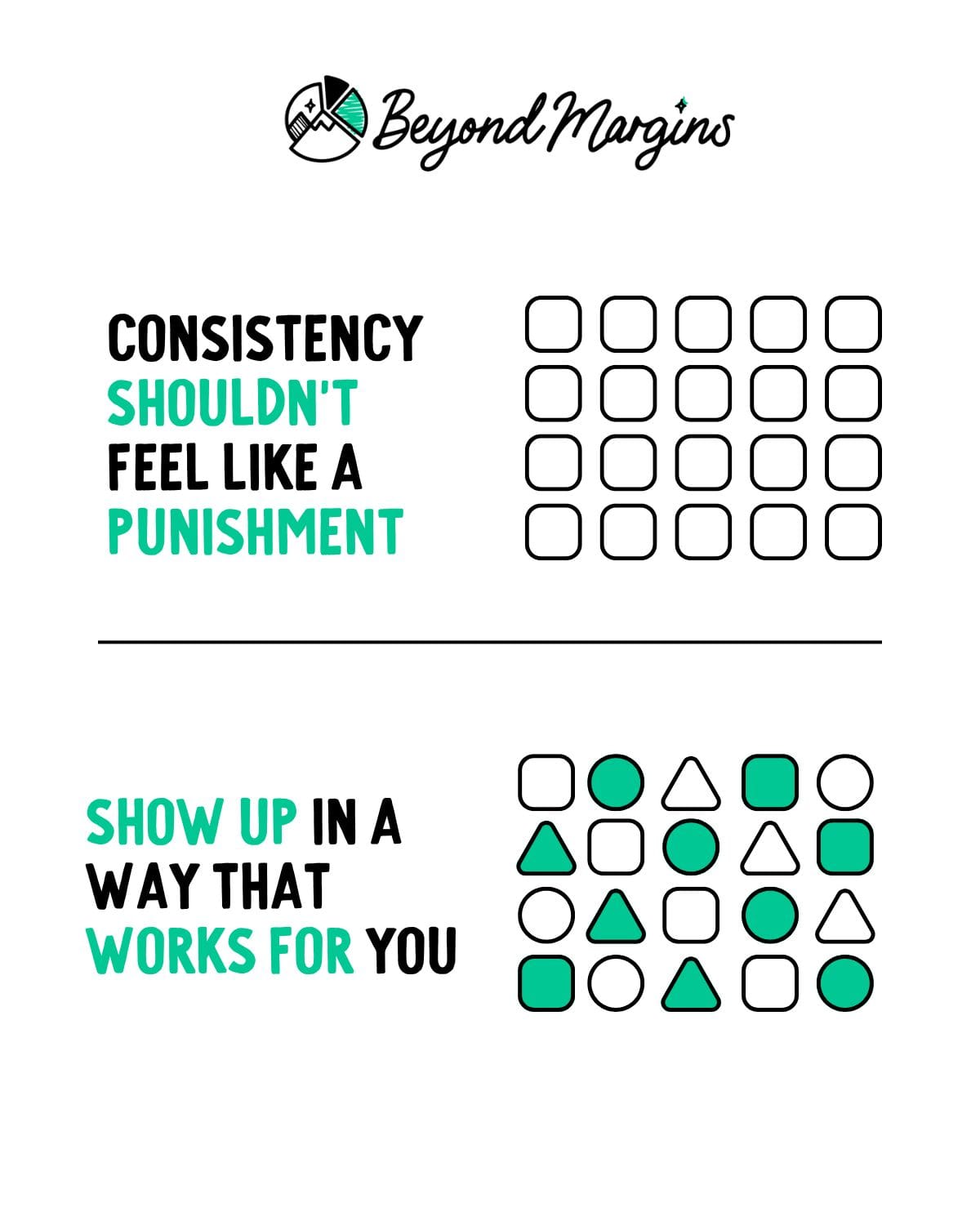
I want to be clear about something before we go further: this is not a prescription. Potato/tornado is my pattern. It might be yours too - I've heard from enough people that it resonated immediately when I first described it that I know it's not just me. But it's also not universal.
Some people genuinely do their best work at a steady, consistent pace. Slow, regular, predictable effort that compounds over time. That's a real pattern and it works beautifully for the people who have it. Some people have energy cycles tied to their health, their seasons, their life circumstances, their neurology. Some people's patterns change depending on what's happening in their business or their life.
The pattern itself isn't the point. The point is that you have one. You have a way that you actually work... not a way you're supposed to work, not a way that looks good on a productivity framework, but the actual rhythm of how your energy moves through a week, a month, a season. And most people spend an enormous amount of effort trying to override that pattern rather than design around it.
What I stopped doing was treating my energy pattern as a problem to solve. What I started doing was treating it as a design input, the same way I'd treat my service offerings or my pricing or my client relationships. It's just information about how I work. And if I want my business to feel calmer, it needs to be built around how I actually work, not around how I wish I worked or how I think I'm supposed to work.
This might seem like a small idea. It isn't.
Knowing how your energy actually moves is foundational to almost every other decision you make about how your business is structured. What services you offer and how you deliver them. How you schedule client work. How you handle launches, deadlines, planning cycles. Whether you work with a team or alone. All of those are easier to design well when you start from an honest picture of your own patterns rather than defaulting to whatever someone else built for their patterns.
It also (this part took me a while to learn) makes the business more resilient. When you've designed for potato mode instead of pretending it doesn't exist, potato mode isn't a crisis. It's a planned part of the cycle. The systems are there. The calendar is blocked. The work keeps moving. And you actually get to rest, instead of spending your rest feeling guilty about not working.
That's what designing around your own patterns actually looks like in practice. Not an excuse to do less. Not permission to be inconsistent. A structure that makes your actual way of working sustainable over time, rather than slowly grinding you down.
The Calmer Framework™ is built on this idea, that your business needs to fit how you actually work, not the other way around. The Business Design lever is where this gets most specific: the shape of your services, the structure of your client relationships, the rhythm of your work week. All of it can be calibrated to match your actual patterns rather than someone else's defaults.
But it starts here. With the honest question: how do you actually work? Not how you think you should. Not how the advice says you should. How do you?
Because that's what you're designing around. And if you've never answered that question honestly, you've probably been spending a lot of energy fighting yourself, rather than building something that works with you.

